
My Top Five Favourite Sci-Fi Novels (2026 Edition)
It’s been a while since I’ve posted a Top Five list and I’ve been reading a lot of sci-fi lately, so I thought I’d post a list on my current Top Five favourite Sci-Fi novels.
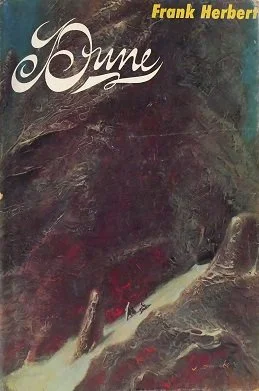
1. Frank Herbert’s Dune (1965)
Though originally a standalone book, Dune has since become part of a hexalogy (as well as an expanded canon supplemented by Brian Herbert and Kevin J. Anderson). The first book, however, is the strongest entry, by far. Thematically, Herbert has always insisted that the book serves as a cautionary tale to approach all charismatic leaders with caution. It accomplishes this task in spades. While Dune is likely not the most accessible book for younger sci-fi fans (due to its slow build up and relative lack of action), it is certainly one that I’ve grown into. What particularly intrigues me in the work is Herbert’s well-written complex political negotiations and intrigue. The world-building is also particularly strong, with diverse factions that have discrete goals located throughout Dune’s complex universe. Another thing that intrigues me about this book is that it is a space opera, which, like Isaac Asimov’s Foundation series, does not contain sapient aliens. The book is squarely focused on the future of humanity in the distant future and really expands one’s imagination about the directions and possibilities of human civilization.
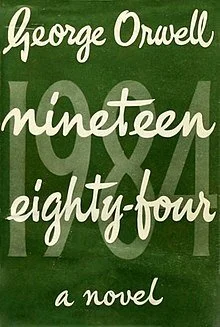
2. George Orwell’s 1984 (1949)
1984 is a close second favourite of mine. As I mention elsewhere, I finally sat down to read this masterpiece on a hot evening in my room while away on a conference in Montreal. The book was so evocative that I ended up staying up late into the night and reading most of the book in a single sitting. It could be debated whether this book really fits into the strict category of “sci-fi” and whether it is more of a speculative fiction, but it frequently ends up in peoples’ sci-fi lists. This is certainly the most powerful dystopian themed book that I’ve read to date and was one of the major inspirations for my recent foray into utopian and dystopian literature. While the work is a classic, it strikes me as odd that it’s so often included in high school reading curricula; to me, the book is far too complicated for the average teenage reader, not to mention it’s incredibly dark themes. I’m still waiting for this one to get an amazing film adaptation at the cinema—maybe one day!
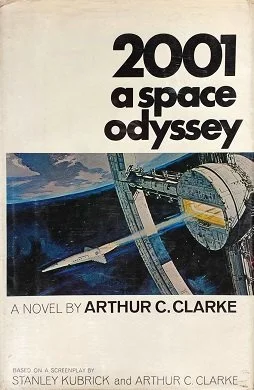
3. Arthur C. Clarke’s 2001: A Spacer Odyssey (1972)
Probably similar to the majority of 2001 fans, I was first exposed to this story via Stanley Kubrick’s film adaptation (written simultaneously to the novel). I know that the film is also a classic, but, due to my age at first watch, I really struggled to understand the themes of the film initially. Accordingly, I long held a bias towards the novelization. However, I admit that I was wrong! The book is absolutely fantastic and fills in a lot of the gaps that were a bit overly unclear in the film adaptation (for e.g. the nature of why the robot HAL goes crazy). The other thing that fascinates me about the book is the way it significantly diverges from the film, such as the mission being to Saturn in the book and to Jupiter in the movie. I remember sitting down and reading the first few pages of this incredible book and being totally enraptured by the hominids and their interaction with the monolith. The mystery in this one made it an absolute page turner for me!
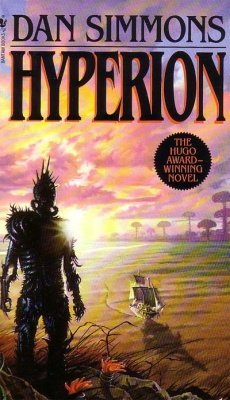
4. Dan Simmons’ Hyperion (1989)
In full disclosure, I have not yet read the sequels to this book, and, when I do, they will likely affect my ranking. That said, the first book is epic! The structure of Hyperion famously follows that of the medieval Canterbury Tales, which involves pilgrims traveling to Canterbury and recounting their individual stories. The same thing happens in Hyperion, except the pilgrims in the modern novel are travelling to the fictional (and highly enigmatic planet) Hyperion. Much of Hyperion is focused on the strange entity known as the Shrike, who resides upon and is even worshipped on Hyperion. The mystery about what the Shrike is deepens as the reader makes their way through the individual accounts of the pilgrims, learning about their diverse motives for visiting the planet.
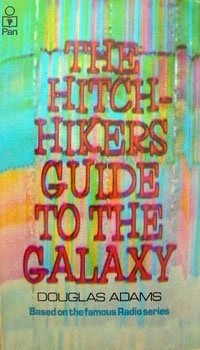
5. Douglas Adams’ The Hitchhiker’s Guide to the Galaxy (1979)
This was another one that I was first exposed to via film adaptation (2005). I thought the film was ok, but I was not initially overly fond of the story or silly bent. However, The Hitchhiker’s Guide to the Galaxy (1979) has long been considered a classic among sci-fi enthusiasts, particularly given its comedic bent. Accordingly, I decided to give the book a shot. I was not disappointed. The Hitchhikers Guide to the Galaxy is described as the first entry in a trilogy of six books, which immediately sets the tone for the type of humour your getting into here. I’ve long been a fan of British humour, having grown up reading The Beano and The Dandy comics, so, once I got over my earlier prejudice that all sci-fi had to be dark and gritty, I learned to really love this book and its sequels.
Well there you have it: my top five sci-fi novels (for now). There are certainly some other really great sci-fi literature out there that didn’t make my top five. I would like to give an honorable mention to Margaret Atwood’s The Testaments (2019), which could easily slide into my top five in a future list. I’m probably in the minority here, but I actually like this sequel to The Handmaid’s Tale more than the original.
See you next time!
AK-M